Pages

Saturday, September 24, 2022

Occultation: The Ideal Small Food Plot Establishment Method


One of my biggest challenges since purchasing my property has been to find the best way to establish a food plot. Because my property was once part of an active cattle operation the majority of it is covered in perennial cool season pasture grasses such as Meadow foxtail, Smooth brome and Kentucky bluegrass. This means the first step to transition a new plot into productive forage for wild game is to terminate these grasses and other weeds. 


The problem with these grasses, however, is that they are extremely resilient and hard to kill. Once they take hold they spread through rhizomes and will eventually create a dense impenetrable sod that prevents other plants from establishing. They also are very tolerant of close grazing and mowing. Even if you continuously scalped them with a weedeater every few weeks during the growing season some would still hold on and if you stopped they would slowly but eventually make a comeback and spread back to their original sod bound state. I know this from personal experience. So this ultimately is not a viable option to terminate them. 


Some other methods I've tried have been to use a shovel to flip the sod upside down to smother it. This was also unsuccessful because the roots would resprout even after being turned upside down and eventually would regrow through the upturned sod. This, like scalping with a weedeater, was a ton of backbreaking work, especially over a large area.  So, in order to terminate the sod I had to come up with something different. 


One option that would probably work, but that I wanted to avoid due to potential health hazards was the use of herbicides like glyphosate. While many people use chemicals like this to terminate pasture this was not a viable option for me because I am not comfortable using these potentially dangerous synthetic compounds in an area where my family, livestock and wild game would be frequenting. So at least for me my ideal sod termination method would have to be organic. 


Another potential option would be to use a rototiller or similar equipment to turn over the soil and terminate the grass. However, this would probably take multiple applications. Ultimately I would like to avoid tillage as much as I can to protect the soil health. My ideal method would preferably be no-till. 


After researching my potential options over the years I eventually came across the concept of Occultation.  While searching online for methods to terminate grass I came across some people who were using black plastic tarps to kill lawn grass to establish gardens in their yards. This method used the opaqueness of the tarp to smother and starve the grass of sunlight, killing it over several months. This method was both organic and no-till and also was relatively easy and didn't take a lot of backbreaking work. The one major downside being that it takes a long time to take effect. For me, this was totally fine, as I had plenty of time to establish my food plots. 


The more I thought about this process the more I realized how genius it was. In nature this is a very common way grasses die. As a meadow dominated by grasses gets invaded by shrubs and trees, they eventually block out the sun from reaching the grass and over time as the trees grow and their canopy covers more area the grasses cease the ability to photosynthesize. They eventually die out completely. This process in nature takes much longer than using a plastic tarp but the principle is the same. This is called occultation, which means to obscure from view. 


When we occultate a pasture from the sun with a plastic tarp we are preventing the grass from photosynthesizing. Over time the grass will use up all of its roots' energy reserves trying to send up new shoots to intercept the sun's rays. This process can also be observed when something such as a stack of firewood is left on a lawn for too long and eventually you create a bare spot because the grass has been starved of sunlight.


In my opinion, this is the best way to establish a small food plot. It is both organic and no-till and is relatively easy and affordable. 


In order to occultate an area of grass that you want to turn into a food plot you will have to first acquire an opaque plastic tarp. The most common type of tarp used for this purpose is a black silage tarp which can usually be purchased at farm supply stores. You can also sometimes find used ones for much cheaper or free from farmers who use them to make silage or to preserve haystacks.


 Another option that may work is used vinyl billboard signs. These can be found online from companies trying to recycle them. For the establishment of a food plot you will likely want to try to find the largest ones you can get your hands on. The one I have been using for the past couple of years was bought new and is 40'x100'. I have moved this to a new spot every year to expand the area of my food plot. You can do this every year until your plot reaches it's desired size or you can acquire multiple tarps to fit the size of your plot. 


 Once you have your tarp you will generally want to put it down as soon as grass growth starts in the spring. For me this is usually early March. Also you will want to prepare the plot the year before by mowing the grass short and keeping it short for a full growing season to weaken the roots. This will allow the tarp to kill the grass quicker the following year. You also want to make sure there are no cut stalks of stiffer weeds that could poke through your tarp and create a hole. If you do get holes, which you probably will after several years of use, you can always patch them up with duct tape. 


Once your plot is prepared and you're ready to put down your tarp you can unfold it and place it on the plot. Then once it is stretched out smooth you will need to weigh down the edges with stones or other objects to prevent wind from getting underneath and blowing it around. It's a good idea to check it every few weeks or so to make sure the wind hasn't moved it. 


After securing the tarp onto your future food plot in the early spring you will want to leave it there for at least 4-5 months to get a complete kill of the sod. If you prepared the area properly the previous growing season by keeping the grass short, then you will probably be able to kill the grass quicker. I would not do any less than 4 months, with 5+ months being ideal for a complete kill.


 Once your tarp has been sitting on your plot for the recommended amount of time then you can remove it and you will be left with the dead sod. At this point you are left with a blank slate and can plant a food plot using whatever method you prefer. 


For me, if I'm planting a perennial food plot, I will frost seed over the winter or wait until early the following spring to broadcast my perennial mix. Then, I will use my chain harrow to rake in the seed to get good seed-to-soil contact. If waiting until spring to plant, you may get some winter annual weeds coming up in your plot, but harrowing can help remove them. Also while your tarp is down you will want to make sure that no grass is producing seed anywhere near the tarped plot back to a minimum of 15' away. If you don't do this then the grass seed can blow in and germinate once the tarp is removed and could be very difficult to control without starting over.


That is the rundown of my preferred method for establishing a new food plot on virgin ground that is dominated by grasses and other weeds. This method was developed after years of research and personal experience and I think it is the best one for smaller food plots where you want to protect the soil from chemicals and tillage. 


For larger plots that you don't have years to create or the money to purchase all the necessary tarps then I believe tillage would probably be the next best option. While not ideal, because it can destroy the soil structure, this will recover over time as long as you are not repeating the tillage. A one-time till is a relatively safe option for a food plot establishment, in my opinion, although heavy weed pressure will usually be something that you will have to deal with.


 So there it is. Hopefully this information can help you establish your new food plot and you can create some great forage to feed the wild game on the property you're managing along with help you improve your soil health. 


Friday, June 24, 2022

Food Plots Update: Spring 2022


Since my last food plot update at the beginning of the year we have had some very interesting and mostly beneficial weather conditions and my food plots have really flourished up until now. My large test plot where I used the black tarp to kill the sod last year has done especially well. 


After planting it last fall with my cool season annual mix it germinated and grew very well before winter hit. Then we had a long cold snowy winter with continuous snow cover until early March. Then we had a very cool and wet spring up until mid June and because of the abundant moisture this plot performed amazingly. By late April this plot was getting quite dense especially with the winter rye and camelina. And then over the next month through the first week of June this plot exploded. In this short amount of time the rye grew from about 1 foot tall to about 6 feet and the Camelina also did exceptionally well. 


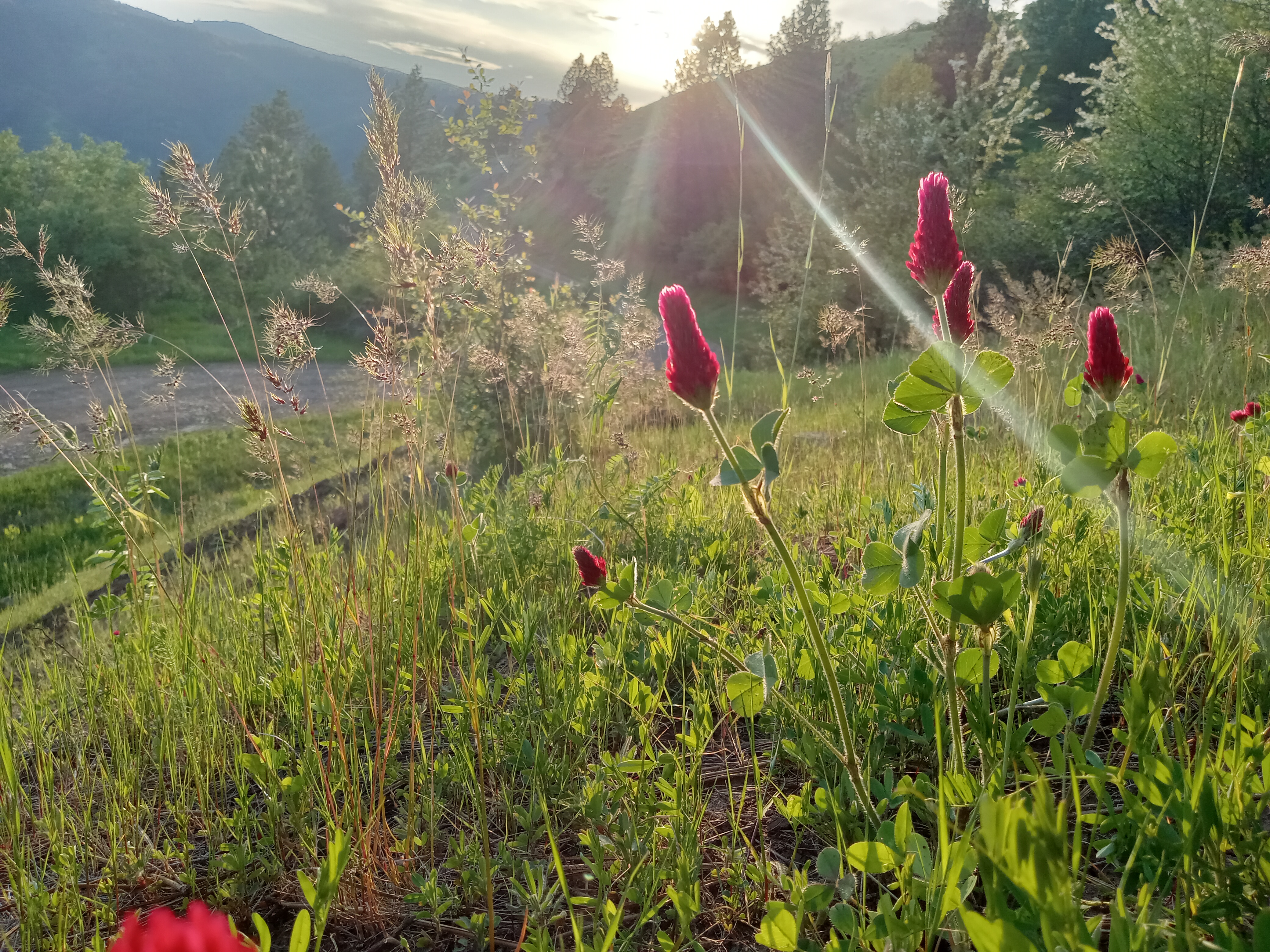
The rest of the species in the mix such as the various clovers and the hairy/woolypod vetch didn't do quite as well which I mainly attribute to too low of a seeding rate, being overly browsed by deer and also by being shaded out by the rye and camelina. However the few clovers and vetchs that did survive seemed to be thriving. Only a small handful of the rapeseed survived and I believe that was because of a too short of a season after germination before going into winter dormancy as well as poor winter hardiness so I will probably not include this in my future mixes. I also didn't see any common vetch that survived in this plot so I will also remove it from future mixes. The only clover I didn't see in this plot was the persian clover so I will probably not include it either. And the rose clover was fairly sparse in this plot as well so I will not include it in my mixes for areas with higher quality soils, but it did thrive in my road cut plot so I will keep it in mixes for poorer soils. So for my future cool season mix I will likely narrow it down to just winter rye and winter camelina, both at lower seeding rates, as well as crimson clover, balansa clover, arrowleaf clover and hairy/woolypod vetch all with higher seeding rates. 


In early June I decided to plant an annual warm season mix, which included soybeans, sunflowers, safflower, buckwheat, sorghum, and 3 types of millet. I planted it into last year's tarped plot that had the cool season mix as well as in an adjacent plot that I tarped to kill the sod from March until June this spring. For the new tarped plot I used the harrow to break up the dead sod and broadcast my summer annual mix into and harrowed again after broadcasting. So far this plot has had very good germination with my mix and I expect it to do very well over the summer. The only problem I see in this plot is that some of the sod grass was starting to come back so I will probably need to keep the tarp down throughout the summer in new future plots.


Next to this in my winter annual plot I broadcast my summer mix into the standing cool season mix and then crimped it down on top of the new seed. I probably crimped it down too early because a lot of the rye hadn't even begun flowering yet and after I crimped it a lot of it stood back up or regrew and proceeded to flower and set seed. However, I'm not too worried about this because it appears a lot of my summer mix still germinated and is growing well even with the shade from the partially standing rye. In the future though I should try to wait at least until flowering to crimp the rye so it gets a better termination rate. 


In my road cut plot last fall's cool season mix did fairly well, especially the clovers and hairy/woolypod vetch. I also broadcast several perennial mixes here in March, April and May and most seem to be doing pretty well. My biggest mix was a frost seeding mix I planted in March which included red clover, Aberlasting Hybrid clover,  birdsfoot trefoil, small burnet, forage chicory, forage plantain, blue flax and sweet clover. In April my mix included crownvetch and yellow alfalfa. And finally in May I planted cicer milkvetch. Our wet spring should help these mixes establish well and hopefully by this time next year these mixes will be flourishing. I also did a small test plot of just cicer milkvetch in a spot with better soil since I think it will be a key component in my future pasture cropping mix that I decided to delay planting until next year. 


Last year I also planted the cool season mix on some of the poorer soil areas that had been covered in invasive star thistles and other weeds. Like the previous year I mowed the starthistle in the summer during flowering then broadcast my cool season mix in September. These areas had some growth but overall they did not perform well. I think that because of the abundant weeds in the area,  that were unaffected by my summer mowing, my mix was outcompeted, especially by invasive grasses, and therefore grew poorly. So in the future I don't think I will reseed these areas with my mixes until I have terminated all the plants using a black plastic covering as this seems to be the best method to terminate grasses and weeds on my property. I will,  however, probably use livestock such as my geese and eventually sheep to improve the soil in these areas and eventually I will use the black plastic and put in new plots but that will be a fairly long term plan. For now I will keep it in more of a fallow state until I can put my animals onto it. 


Finally my roadside plot that I was using weed-eating and a cool season cover crop mix to kill off the starthistle seems to be doing very well. There is still some starthistle in it,  but it is way less than last year. This year I will once again weedeat it at flowering to prevent the starthistle from going to seed. I think my future plans for this area is to remove the medium and large rocks here during the winter so I can mow it with a lawn mower next year and I will likely frost seed it with a perennial mix so that it will be easier to manage.


So that is how my food plots are doing so far this year. It's interesting to see how my mixes are doing with these wildly varying weather conditions over the past few years. Last year we had a record hot and dry spring and this year's spring was the exact opposite with very cold and wet conditions. But these variations really help me test how well my seed mixes are adapted to my climate and I'm really starting to understand their requirements and narrow down the best performers. Doing these experiments I am continuously learning about how to provide wild game with excellent forage all year long and it continues to be a very rewarding endeavor and I'm looking forward to what else I will learn in the future.

Saturday, March 12, 2022

Pasture-food plotting?


This year I'm planning on trying an interesting experiment with my food plots that I call Pasture-food plotting. It is a method directly based on Australian farmer Colin Seis's concept of pasture-cropping. Colin's basic idea is to grow annual crops in a perennial livestock pasture using special management techniques that allow both a seasonal perennial forage crop and in the opposite season an annual commodity crop. The main method used to allow this is a close grazing of the perennial crop during the end of it's season so it's roots will decay some and allow room for and provide nutrients to the following annual crop. Then at around the time the annual crop is ready to be harvested the perennial forage starts to regrow from it's dormant roots as temperatures become favorable and after harvesting the annual crop it grows up through the stubble and provides a normal season of growth for the pasture. Depending on climate this can either be done with cool season annuals and warm season perennials or vice versa with warm season annuals and cool season perennials.  This method is probably best suited for subtropical to warm temperate climates with precipitation spread fairly evenly throughout the year, but it is likely possible under some other climatic conditions as well.


So for my version of it instead of using a perennial pasture forage crop and an annual commodity crop I will be using a perennial food plot and an annual food plot both geared for ultimate wildlife forage value. I have decided to use a rotation of cool season annuals and warm season perennials. This is because according to Colin's pasture-cropping method you want to grow the perennials during the harsher time of the year for plants in your climate. For example in my climate summer is the harshest season. This is because we have a summer dry season and wild daily temperature swings. On the other hand our fall through spring period is relatively mild and wet and the natural vegetation in the area is mainly cool season plants to take advantage of these conditions. Because annuals need better growing conditions than perennials to do well I will be using them during our more mild cool season. Also unlike annuals, once established, perennial plants can tap into their extensive root systems to access moisture deeper in the soil during dry conditions and are overall better at handling harsher climates.


So now that I've figured out the seasonal growing habits of the plants I can use I can start to choose the actual species. For the cool season annuals I plan on using a fall planted mix which includes Winter Rye, Winter Camelina, Rapeseed, Crimson Clover, Balansa Clover, Persian Clover, Rose Clover,  Common Vetch, Woolly-pod Vetch and Hairy Vetch. This mix is the same one I used for my fall seeded food plots this past fall and over time once I see how it does I will likely alter it by adding and subtracting different plants to the mix depending on what does well and what doesn't. 


For my warm season perennial mix I think I will have a greater challenge finding species that will do well. This is because the natural plants in my area are mainly cool season because of our dry summers so I will need to find species that can tolerate drought conditions well. Also because of our large daily temperature swings during the summer I will have to make sure the species I choose can handle relatively cool nights down into the 50s and even 40s. I think this will greatly limit my options but I still think I should be able to come up with a good mix. One thing I've figured out is that I can look at other regions with similar warm season conditions but drier winters and see if warm season plants from those areas might work for my perennial mix. For example the northern plains and the eastern front of the rocky mountains have very similar summer weather to us in Idaho. Also like us they have a fairly wet spring time and most plants in these regions are warm season plants that get started in the wet springtime and grow through the dry summers. Unlike my area though these places have very dry winters so cool season plants are not as common.  Therefore I believe that if I can choose warm season perennial plants that do well in these areas then in theory they should also be able to grow well here. 


So after doing my research on warm season perennials that do well in the northern plains and along the eastern side of the rocky mountains I've come up with some species that could do well in my area. These include Illinois Bundleflower,  Purple Prairie Clover,  Cicer Milkvetch, Alfalfa,  Yellow Falcata Alfalfa, Sainfoin, Kura Clover,  Crownvetch, Birdsfoot Trefoil, Red Clover, Small Burnet,  Forage Chicory, Forage Plantain,  Blue Flax, Turkish Rocket, Goldenrod, Fireweed, Blue Grama, Little Bluestem, Buffalograss,  Switchgrass, Big Bluestem and Indiangrass. This is a fairly diverse mix and I fully expect a large percentage of these to not do well, however I think it's important to at least give these species a shot to see what will actually grow in my area. Also some of these species may be considered cool season perennials by some people, but I believe they all have the ability to grow during the summer months as long as conditions do not become too unfavourable so they should still work well for my experiment. 


So that is my plan. This year I will try seeding some of these warm season species into my current food plots in order to get some summer growth from my plots and then hopefully once established they will come back every summer. So once temperatures warm I will crimp or mow my mature cool season annuals onto the seeds of my summer perennial mix sometime in late spring and hopefully we'll get enough moisture after that to germinate them and have them grow through the summer. Then in the fall I will mow this mixture on top of the seeds in my fall planted annual mix and hopefully if the experiment is a success then I can do this every year and have diverse food plots providing great food for wildlife on a year round basis. 


Wednesday, January 5, 2022

Food plots 2021: Year in Review


This year was a very valuable one for me in learning about my food plotting strategy. We had a record drought in the spring, record heat in the summer, a very warm wet fall and so far this winter we have gotten a ton of snow. All of these conditions presented unique challenges and helped me see which plant species were hardy enough to survive in the harsh and changing conditions.


After frost seeding a diverse mix at the end of last winter in March we experienced the driest spring on record for our area and that led to an almost complete failure in germination. The one big exception was the small burnet, which is proving to me to be an exceptionally hardy species and solidifying my decision to make it a key player in my future mixes. 


The mixes that I had planted in the fall of 2020 seemed to do fairly well despite our drought. Cereal rye continues to prove that it is a great hardy fall annual and provides a lot of forage and biomass. Also some clovers like crimson and arrowleaf have both proven to do very well in my area. This mix I think did pretty well because of it's fall germination and winter dormancy which made it already well established by the time it experienced the drought and is leading me to believe that as long as my seed mixes get a decent amount of moisture during the time of germination than they should be able to establish and survive through much drier periods.


This past year I did not plant a summer annual plot because of the drought, however I did decide to make a mini plot in my garden area where I planted buckwheat,  sorghum, sunflowers, lablab, cowpeas and scarlet runner beans. I gave this plot just enough water to keep it alive through the summer but only the sunflowers and buckwheat did ok. The rest barely grew and I will probably remove them from my future summer annual mixes.  I would like to try some other species this summer, however, to see if I can develop a hardy summer mix. Some species I'd like to try out are safflower, various types of millet, forage corn and forage soybeans. I think the summers in my area are just too cool for some of the more heat loving plants like cowpeas and lablab and it will be best for me to stick with warm season plants that are well known to thrive under somewhat cooler conditions. 


After our long hot and dry summer was coming to an end in September it was time to plant my fall annual mix. This fall I decided to come up with a very diverse mix and one which would be planted over the largest area of my property yet. I had a new plot where my large circular plot used to be where I had put down a large black plastic tarp in the early spring and left it into the summer to kill off the underlying sod. It worked very well and by September all the sod grass was dead. Then I decided to purchase a drag harrow to use to bury the seeds in the plot instead of just broadcasting over the dead sod. I actually broadcasted my fall mix first onto the dead sod then used the harrow to rake the seeds into the dirt and make sure they had enough seed to soil contact. This worked very well after our first fall rains in late September and we got excellent germination over the next month or so. 


I also spread my mix onto the roadcut that circles my property and it also had very good germination.  We had really good growth this fall because we had a wetter and warmer than normal fall. This allowed my mixes to put on some really good growth before they entered winter dormancy and I think we will get some great diverse and lush plots this spring especially since our winter up until this point has been very wet. 


Before this upcoming spring I will frost seed another mix onto my plots, mainly perennials, in order to make up for last spring and hopefully I can get some better germination than I got last spring. I also have plans to try out a very unique mix for an experiment I want to try out where I will be attempting the method of "Pasture-cropping" invented by Colin Seis from Australia. Although my experiment will be more like "Pasture-food plotting" and if successful could help me provide multiple seasons of forage in one single plot. More about this experiment in a future post so stay tuned. 


This year was another huge learning experience for me and I will no doubt be learning even more during this upcoming year and in future years. Also my food plotting areas will continue to grow in size and over the next few years I hope to have permanently established foodplots in every location on my property that is able to grow them. There's lots of exciting things to look forward to. I can't wait to see how it turns out.

Tuesday, November 16, 2021

The Beginner's Guide to Western Food Plots


If you study weather maps of the US as much as I do you'll quickly realize that the Western half of the US is in general much drier than the eastern half. With the exception of the Pacific coast and some higher inland terrain most of the western US can be considered semi-arid and is made up of vast deserts, arid scrub and steppe grasslands and savannas.  This is mainly because the mountainous terrain creates rain shadows from weather systems that come in from the Pacific ocean. Western Washington and Oregon are quite wet most of the year, but the huge Cascade and Sierra Nevada ranges block most of the moisture off the ocean from reaching the barren interior. This makes growing food plots in most of the west very difficult, especially when compared to the rain soaked eastern half of the US. However,  even though it is more difficult there are some general guidelines that can help those living in these areas create great forage opportunities for the wild game on their property.  


For as dry as the western US is, in most areas you will have at least a portion of the year with enough precipitation to establish a food plot. Most of the west has a rainy and a dry season, which can help you determine the best time to establish your plot. These seasons differ however, based on where exactly in the west you are located. As a general rule the northwestern US from extreme western Montana all the way to the coast and down through southern California as well as most of the higher terrain throughout the west will have a winter peak in precipitation. Most of this falls as heavy snows in the mountains and foothills, but in the lower elevation areas such as the Columbia Plateau most of the precipitation will fall as rain.


East of the continental divide from Montana and Wyoming and east to the great plains will have a peak of precipitation in spring and early summer. These areas will generally see large spring thunderstorms move through as moisture from melting snow in the mountains is blown east and causes instability in the atmosphere. 


As you go south into central Colorado, New Mexico, Arizona and southern Utah you start to get summer monsoonal moisture that comes up from the gulf of mexico and tropical pacific. These are also usually large thunderstorms which can sometimes produce torrential rainfall in areas that are usually thought of as deserts. 


Then from western Colorado into most of  Utah you usually will get a small peak of precipitation in the fall. In the areas of true desert from Western Utah, Southern Idaho, Eastern Oregon and most of Nevada and parts of California and Arizona you may not be able to grow much of a food plot because these areas have very low precipitation spread out through each month. But other than those areas of true deserts most of the west will have at least a month or 2 of moderate average precipitation where a food plot could potentially be established.  


Another way to determine what will do well in your area is to look at what kind of herbaceous plants are already in your area. Are they warm season grasses? Cool season winter annual weeds? Whatever the dominant vegetation is will really help to narrow down the types of plants that would do well in your area.


Once you've figured out the wettest time of year for your region and observed and researched the natural vegetation in your area it's time to look at what types of plants will actually grow in your specific climate. For areas of the Northwest mixes made of late fall planted winter annuals do very well because they are hardy enough to survive the cold of winter as well as take advantage of winter precipitation.  Cereal grains like Winter wheat and Winter rye are some of the top choices for this area and are actually grown as crops in many areas of the northwest. Other potential plants that would do well are annual clovers such as crimson and balansa as well as hairy and common vetch. Winter Camelina, a unique brassica, is also a good choice for this region because of its great cold tolerance. 


For the Northern plains and northeastern Rockies you'll mostly want to focus on spring annuals such as spring wheat and spring peas. Also in most areas some more cool weather tolerant summer annuals could be used such as sunflowers, buckwheat and safflower. Another good option for this area is Alfalfa because of its drought hardiness and mainly spring focused growth.


For the monsoonal climates of the southwest, summer annuals such as those previously mentioned as well as more heat tolerant types such as lablab, cowpeas and grain sorghum could be good choices to take advantage of the heat and summer rains. I also think late summer planted fall mixes would probably do well here such as brassicas and even some of the more cool season species such as annual clovers, vetches and some winter cereal grains. 


And then for the areas with a fall peak in precipitation the summer annual buckwheat would probably do well because of it's fast growing ability that could take advantage of the last bit of warmth before the first fall frosts. And then most of the fall-planted winter annuals that do well in the northwest should also do well here. 


For areas of true deserts and low rainfall all year it will be very difficult to create a mix that does well, however there are some exceptionally hardy plant species that might be able to take hold with just a small amount of moisture.  One very drought hardy option would be small burnet. This plant can grow in areas with annual precipitation in the low teens and its seed is able to sit in the soil for long periods of time until a passing shower produces just enough rain to germinate it. I've planted this species on some of the more harsher south facing slopes on my property and it has thrived where other species have struggled along at best. Some other potential options for really dry areas are winterfat and forage kochia. These are both actually subshrubs and are exceptionally hardy to drought and would probably do well across most of the west, especially in areas that are too dry for other common food plot species. 


Another important thing to keep in mind is that because of the sometimes unpredictable climate you may not get the seasonal rains for your area at all. Droughts can be very common in the west and sometimes this might cause your food plots to completely fail. However,  I believe that if you take care of the soil on your property by practicing regenerative style management and by using permaculture techniques then this will add resilience to your ecosystem and you'll be able to grow more than you otherwise would if using more conventional food plotting methods.  That's why in the west it is especially important to use those methods that help build soil and retain moisture on your property,  such as no-till and diverse mixes, and will help you grow high quality forage for wild game under relatively difficult and unpredictable conditions.

Saturday, August 14, 2021

The Two Paths to Creating a Hunter's Eden


The way I see it there are two main ecosystem level designs you could implement in order to create a Hunter's Eden on your property. Understanding succession and what Allan Savory refers to as "brittleness" will be key in determining which path you should focus on with your property. The first path I will call the Succession Dependent path and the second will be the Grazing Dependent path.  With the first path you will be focusing on managing succession to create temporary foraging areas by periodically opening up the canopy and planting desirable seeds and plants at each level of succession. The second path would mainly be focused on using large grazing animals (usually livestock but wild or feral grazers could also potentially be used under certain conditions) to maintain long term grassland/savanna plant communities using things like holistic grazing practices. Both of these paths have the potential to work in varying environments, but the path you choose for your property will largely be determined by brittleness and the tools available to you. 


The first path would be the Succession Dependent path. This path would be best utilized in relatively non-brittle environments or in areas receiving plentiful precipitation for most of the year. This is because in these environments succession happens very quickly and when land is disturbed it quickly is covered up by weeds and the stages of succession proceed fairly rapidly. With this method you will mostly be trying to plant desirable seeds and plants for each level of succession and removing undesirable plants.  This path has the benefit of being relatively easy to maintain with the most laborious parts being planting and creating disturbances. This path is also described in my previous post "Cycling Through Plant Succession" and basically involves creating and maintaining a "food forest" type system for wildlife.


 This path could potentially work well in wetter areas with relatively high deer densities.  This is because the stages of succession would transition fast enough so that the deer would not be able to over browse the most palatable forage. If however you were attempting to maintain a traditional food plot at that stationary level of succession for a long period of time, eventually the deer would over browse the most desirable species and eventually only undesirable "weeds" would remain. This is because deer are effectively continuous grazers. Unlike bison and other large grazers, which naturally graze on a rotational basis, deer stay in the same general area and continuously graze the same plants over and over until the most palatable species die out. This is the same problem you have when you graze cattle in a single pasture year round. They pick out all the best forage first and then over time all that is left is an overgrazed weedy pasture with very little that the cattle actually want to eat. With cattle this is remedied by rotational grazing them through multiple pastures at high densities where they eat and trample down everything and then give it time to rest and recover until it is ready to be grazed again. Until we can figure out a reasonable way to rotationally graze deer on a large scale I believe the best method to remedy this is to cycle through succession in the manner I have described. 


This path however would be difficult in more brittle environments because succession happens much more slowly, which would give the deer time to over browse the most desirable plants at each level of succession. This problem would be even worse if deer densities in these areas were relatively high.  That's why in my opinion in the drier more brittle environments I would recommend focusing mostly on the Grazing Dependent path.


With the Grazing Dependent path your main focus would be using grazing animals (mainly livestock) to maintain long term "food plots" or pastures in order to maintain a high percentage of desirable plants for forage use for wildlife.  This path would be mostly utilized in brittle environments where there is low rainfall throughout the year or in areas with a long dry season. Also if deer and other wildlife densities in these environments were relatively high then this path would be especially necessary due to the fact that desirable plants would not be able to outcompete the undesirable "weeds" due to the high browsing pressure. However this path could also potentially work well in nonbrittle environments.


 In order for this path to work, however, livestock would need to be periodically rotated through these areas in order to trample weeds and promote the growth of desirable species.  This could be a potential barrier for some landowners due to the cost and effort involved in managing livestock, however it would also be possible to make deals with local ranchers and farmers and possibly lease out your property to be grazed as long as it met with your property's objectives. If no livestock producers were willing to pay you to use your pastures in this specific manner then you could always offer it to them for free or even pay them for the impact that their livestock provide on your property similarly to the concept of prescribed grazing. Grazing animals also could be used to help establish desirable plants as well as remove undesirable ones when first establishing these systems.


Ultimately livestock are potentially a very valuable tool when it comes to managing the plant communities on your property and especially in the drier, more brittle environments where succession does not happen fast enough to outrun the detrimental effects of overbrowsing by deer and other wildlife. Whichever path you choose it's good to know that you could use both even on the same property. For example a north facing slope could be moist enough to where the succession dependent path could work sufficiently whereas on a dry south facing slope on the same property it may be necessary to focus on the grazing dependent path. 

Also even in drier brittle environments the succession dependent path could potentially work if you were able to create less brittle microenvironments by using permaculture techniques such as swales and other earthworks as well as by keeping game densities very low or by utilizing exclusion fences. 


Both the succession dependent and the grazing dependent paths have a huge potential to turn properties across North America and beyond into hunting paradises where hunters can manage the wildlife on their properties in a holistic and sustainable manner and provide their families with a low input source of meat for multiple generations.

Friday, June 11, 2021

Food Plots Update: Spring 2021


            So far 2021 has been a very interesting learning experience for me when it comes to my food plot experiments. First of all we had a record dry Spring (March through May) with virtually no substantial rain events and this led to an almost 100% failure for my frost seeded food plots that I planted in early March. Despite this major setback, however, most of my fall planted plots did relatively ok, especially the cereal rye, as well as many of the perennials I planted in Spring of last year.


The road cut foot plot that I started planting last spring did fairly well. I have a lot of small burnet that are flourishing and flowering and starting to go to seed. I also have a decent amount of sweet clover that is growing very well in some spots. Along with that I have a few scattered crown vetch plants that are hanging on through the drought.  Crownvetch spreads through rhizomes so I’m hoping that if it can hang on long enough to get some moisture then it can spread. Hopefully next spring is much wetter and some of the perennials I planted last year can really take off and flourish.  This past spring in March I frost seeded a lot more seeds onto this plot, however because of the record drought practically nothing survived. It does seem that I got some decent survival with more of the small burnet that I planted, which was very encouraging and is showing me that this plant can take extreme conditions even as a seedling so it will likely become a staple in my future mixes.


Last fall I broadcast-seeded several different plots with some winter annuals. In some spots I planted just cereal rye, some with just annual clovers and some with a mix of both. The clovers I chose were crimson clover, balansa clover, berseem clover and arrowleaf clover. Some of every type I planted survived the winter and grew into this spring, however overall the crimson clover seemed to do the best by far. Berseem clover seemed to do the worst with balansa and arrowleaf in the middle. I planted just clover in one area that was a dry south facing slope that I mowed last summer to help control the starthistle. In this area only the crimson clover seemed to do well, but even it stayed very short and did not put on very much vegetative growth before going to seed. There were also a few scattered balansa and arrowleaf clovers that survived in the plot, but between the heavy browsing pressure from deer, poor soil and our severe spring drought it appeared that most did not survive.


 On another dry south facing slope I had broadcast cereal rye alone. On this plot the rye did not do well at all and had the worst rye growth across the whole property. I think this was because of several factors. Firstly this hillside sees a lot of deer traffic so the rye was heavily browsed throughout the winter and early spring. Secondly, the soil on this plot seems to be quite poor and even the invasive weeds in this area don’t seem to get more than about a foot of growth. Finally the drought we had I’m sure contributed to this poor stand of rye.  However, even despite all these setbacks, it does seem that almost all the rye survived and went to seed, it just was very short and spindly compared to the healthier stands of rye. This means that it wasn’t able to provide much of a benefit for shading out weeds, however, I believe that if any of the factors had been improved, either less browsing pressure, better soil or more rain, then this stand would have probably done a lot better. This is because on some of the other plots where I planted rye that had better soil and less deer traffic there was much better growth even despite the drought. Because of this, in the fall when I plant more rye across my property I will definitely want to put up utilization cages to see how these plants do when they are not being browsed by deer. 


In every other plot that I had seeded rye it seemed to flourish and when planted densely enough it did seem to have enough shade to smother out some weeds. However, in most areas it was not planted very densely and thus wasn't able to suppress many weeds.  Because of this I think this fall I will try to plant the rye more densely as well as add in some hairy vetch and or wooly pod vetch to provide even more shade as well as some nitrogen fixation.  I will also likely add in a few other species such as rapeseed to see if it does well in the mix.  I think the more diversity I have the better my mixes will be at outcompeting weeds.


The best stand of rye I got was probably in my plot where I grew summer annuals, mostly sunflowers, last year and then crimped down the sunflowers onto the cereal rye seeds. This past March I also broadcasted a large mix of different annuals, mostly legumes like vetch and clovers, in order to provide more diversity, however, because of the severe drought practically nothing germinated or survived more than a few weeks after germination. This was also the case across all my other plots that I broadcasted my mixes into this past March. This was pretty discouraging considering that these were my biggest most diverse mixes I had planted to date.  Despite this failure I realized that it is probably a good idea to plant something whenever I have the opportunity.  Because I had planted some mixes in the fall my plots weren’t a total loss and this fall I will plan to plant a very large amount and highly diverse mixes across an even larger area on my property. 


Because of our severe spring drought I decided not to plant any summer annual mixes onto any of my plots, however, I did plant a small plot in my garden with several summer annuals in order to experiment to see what does well under ideal conditions including summer watering. In this tiny plot like my “sunflower plot” from last summer I planted sorghum, buckwheat, sunflowers, cowpeas and lablab. I also added scarlet runner beans due to their supposedly fast prolific growth and affinity for cooler mountain climates as well as their ornamental red flowers. I made sure to inoculate the legumes this time after having had very poor growth last year so if even under these ideal controlled conditions the lablab and cowpeas still don’t do well I’ll know that it is most likely the case that it is just too cool of a climate here for them and I will remove them from my summer annual mixes in the future. I think next year if we have a wet enough spring then I will again try to use summer annual mixes in my no-till (foot crimper) plots in order to take advantage of the summer sun and add more organic matter.  It is admittedly, however, a borderline idea since we have such cool dry summers and developing a mix that will thrive here will surely be a challenge.  I’m thinking next year I’ll try adding in some laredo forage soybeans as well as some painted mountain corn.  Both are summer annuals that are supposedly better adapted to cooler summers and I’ve read both are fairly drought hardy as well so they seem like good potential candidates for my mixes. 


This year so far has taught me quite a bit and I will continue to experiment and test out different mixes and species until I can fine tune one that will thrive here. As I’ve stated in previous posts my ideal mixes will be composed of both perennials and self seeding annuals that are able to not only survive and reproduce, but also spread over time under the conditions on my property. They will need to be winter hardy, drought hardy and tolerant of cool summers with practically no rain. They will also have to be tolerant of browse pressure by deer as well as be able to outcompete weeds. This is a pretty big list of qualities, but there are already a few plants that seem to be star players on my property and are doing well despite harsh conditions. So far the A-team includes cereal rye, crimson clover, hairy vetch, sweet clover, sunflowers and small burnet. Hopefully over time I can keep adding to this list and eventually develop a high diversity mix that I can really be proud of.